Peter Riedel
Season start at Fichtelberg canceled
Climate change hits the spa town of Oberwiesenthal especially hard.
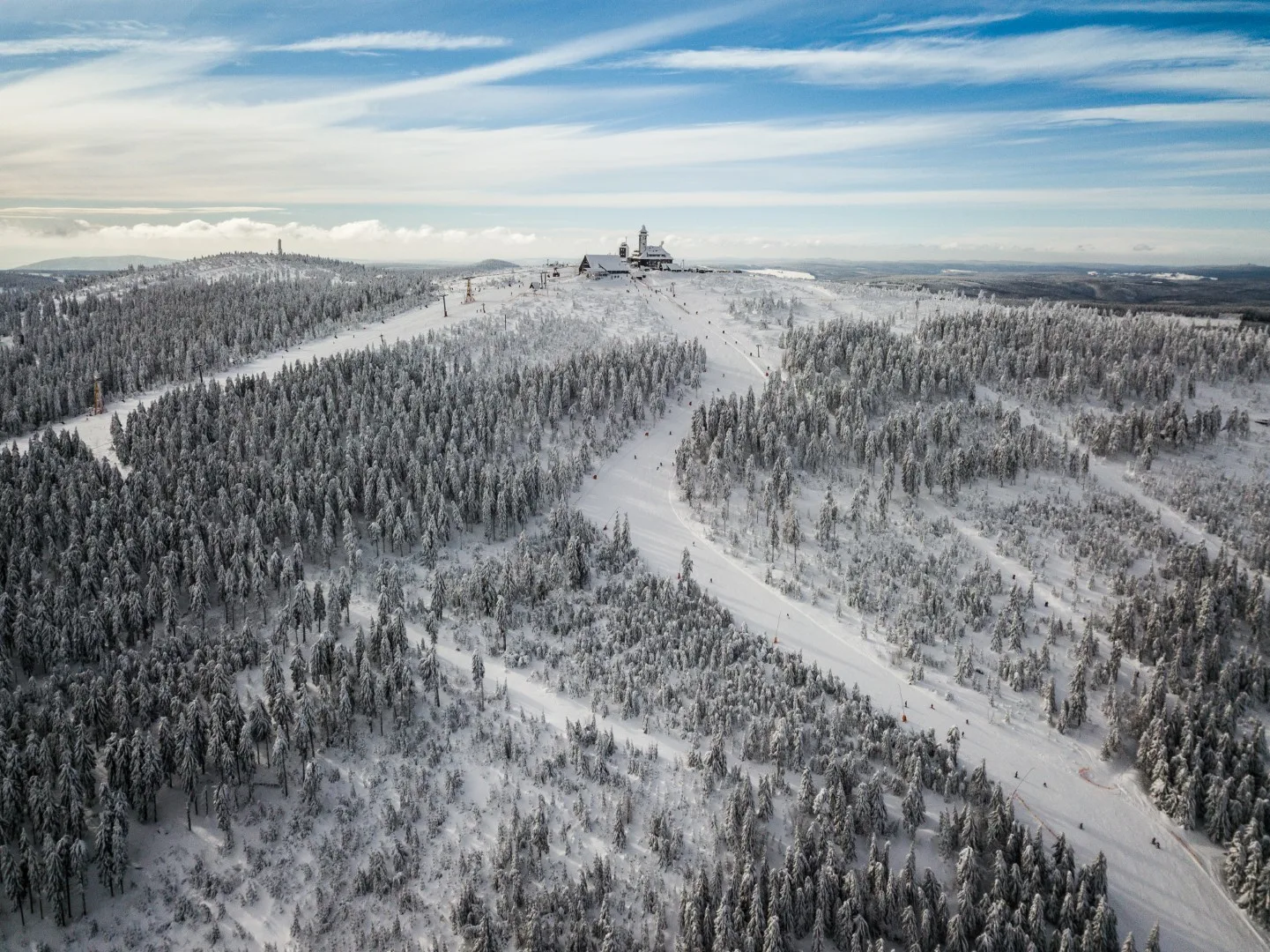
Climate change hits the spa town of Oberwiesenthal especially hard. As Germany’s highest town and Saxony’s most important winter sports center, the region has been highly dependent on snow for decades. But winters are getting milder, the snow cover thinner, and stable frost periods rarer. Just like this winter. The planned start of the winter season for December 13, 2025 on the Fichtelberg had to be postponed due to precarious snow conditions until further notice, with warm temperatures up to 13 degrees Celsius making ski operation impossible.
Alarm bells should be ringing by now because: measurement series at the Fichtelberg clearly show that average snow depth is decreasing, and extreme fluctuations between abundant snow and almost completely green winters are becoming more common. For a place whose identity and value creation are strongly tied to winter sports, this is a central future issue. Last year we were lucky in Frau Holz’s lottery. The heavy snowfall at the beginning of the winter combined with low temperatures secured solid snow cover throughout the season. This year, so far, we have drawn a blank.
Tourism is—no doubt—the most important economic sector of Oberwiesenthal. No other place in the Ore Mountains records more overnights, generated by tourism. Especially winter tourism contributes significantly to regional value creation: hospitality, catering, trade, mountain railways, ski schools and many service providers are directly or indirectly dependent on skiing. If the snow fails, whole structures wobble. Just like this year, which has seen an extremely slow start to winter so far.
To enable snow-sure winter seasons despite climate change, technical snowmaking is becoming increasingly important. Modern snow machines today operate much more efficiently, require less energy, and can produce snow even at near-threshold temperatures. Digital control systems that measure outside temperature and humidity and precise snow depth measurements ensure snow is only made where needed. In addition, storage ponds and optimized water management are becoming increasingly important to conserve resources. In the future, ski areas must increasingly rely on such innovations to stay competitive in times of snow-poor winters.
Another option would probably be snow farming—the deliberate production of snow at subzero temperatures to store it over the summer. Sounds absurd, but is already common in many places. It is already successfully practiced in Oberhof, Seefeld, or Oberstdorf, and exactly that could also help at the Fichtelberg. By creating large piles of snow in spring, covered with insulating materials, a large part of the snow remains into autumn. This allows the season start to be less dependent on early winter weather, training slopes and initial piste sections could open early.
The combination of modern snowmaking technology, intelligent resource management, and snow farming can help Oberwiesenthal secure skiing in the long term. One thing is clear: winter sports are not only a tradition but a vital economic lifeline for the town — and every measure that increases snow reliability also strengthens the future of the entire spa town.