Instead of flowers
The funeral will take place in a small family setting. Please refrain from flowers or condolences. If you still wish to do something, please support ASC Oberwiesenthal e. V. with a donation. That was his explicit wish.
The Miracle of Fichtelberg
14 February 1938 to 5 April 2026. The most successful alpine ski racer of the GDR, three times at the Olympic Games, winner of Adelboden 1961, honorary citizen of Kurort Oberwiesenthal and Lauter.
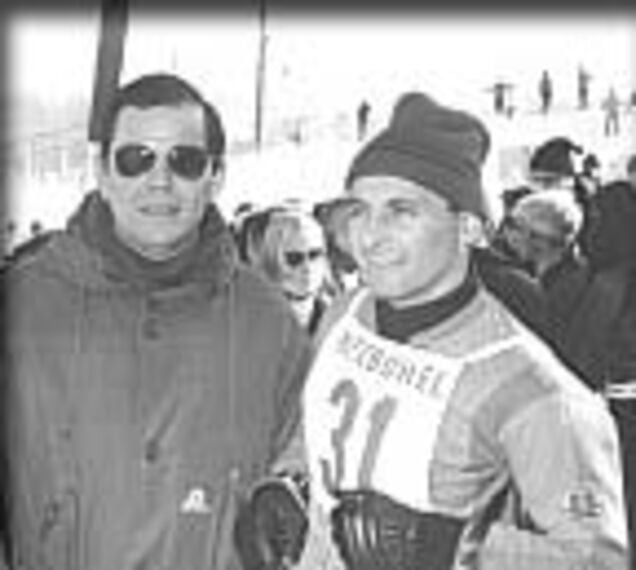
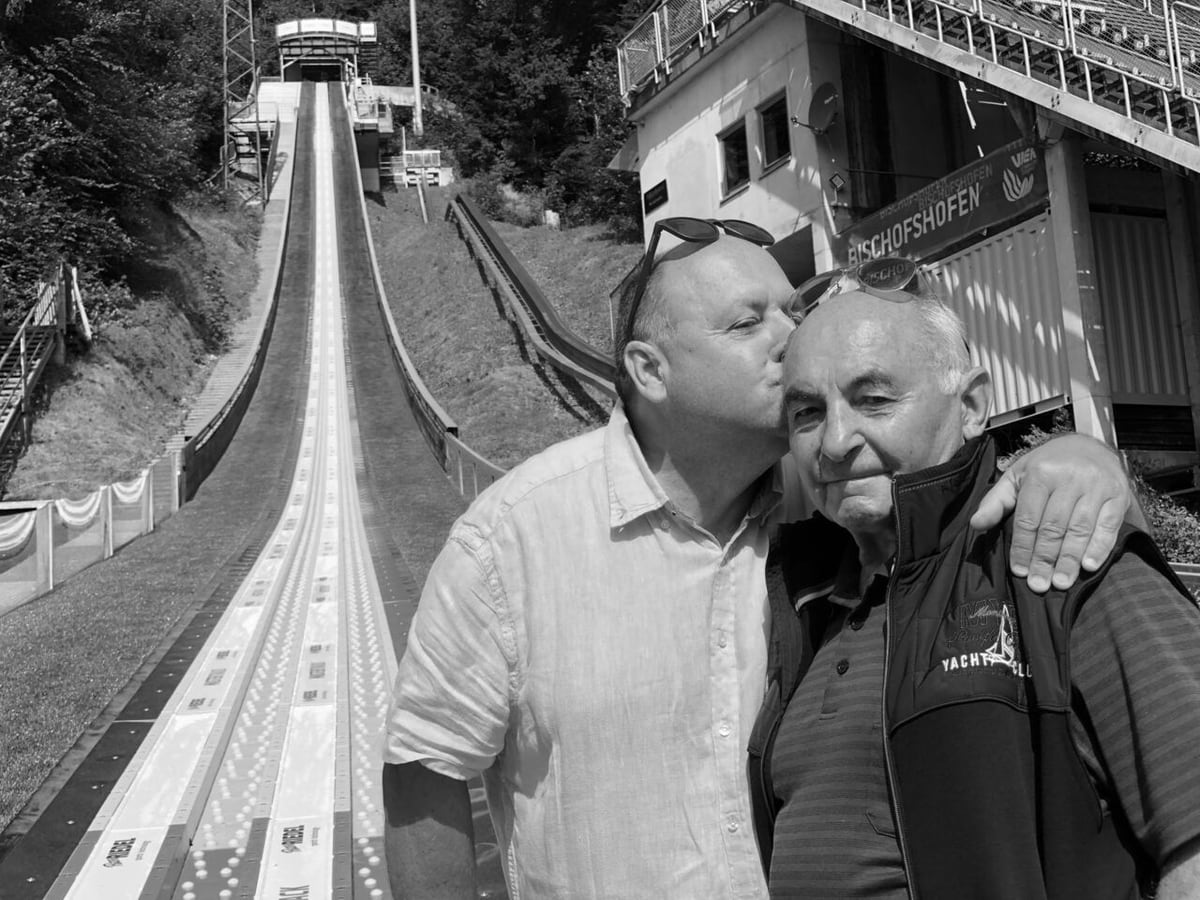
It is incredibly hard for me to say goodbye to my father, Eberhard Riedel. He passed away peacefully yesterday on Easter Sunday after a short, serious illness at the age of 88.
Many people knew my father as the successful East German Olympic skier, an athlete who represented his country on international slopes. For me, he was the man who showed me how to go through life with poise, discipline, and passion.
What distinguished him was not only his skiing ability but his attitude toward sport. He was not a loud person, not one to push himself into the foreground. He worked, trained, and fought, quietly, persistently, with a deep respect for his sport and his fellow competitors.
When you spoke to him about his successes, he rarely talked about placements or rankings. Instead, he spoke of the things not visible to everyone. Of the conditions under which they trained, of icy mornings in the mountains, of the precision this sport demands. He spoke of team spirit, of camaraderie, but also of the pressure to represent an entire country, and that at the time a politically highly volatile period.
After his active career, sport remained a central part of his life. He remained committed to the next generation, passed on his experiences, and stayed closely connected to skiing. It was important to him that young people not only learn technique but also values: fairness, endurance, and the ability to cope with defeats.
To me, he was far more than the athlete. I experienced him as a father, as someone who, despite all discipline, carried great warmth within him. He could be strict, yes, but always fair. He was an absolute family man, and when I needed him, he was there. When I doubted, he was the one who encouraged me to keep going. When I fell, he didn’t just help me up; he taught me how to stand up again on my own in the future.
It is the small moments that are especially beautiful in my memory. But they also hurt all the more: his gaze, his calm words, his quiet smile when he was proud, without saying it out loud.
I was able to say goodbye to him in the hospital. How much I admired him. How much I owe him for what I am today. How often I thought of his strength in difficult moments and that giving up was never an option.
But I know that he lives on in me. In everything he taught me. In the way I think, how I act, how I cope with setbacks. And perhaps also in the courage I now need to let him go.
Dad, I miss you more than words can express. And at the same time I am infinitely grateful to be your son. Thank you for everything. For every minute. For every piece of advice. For your trust. Take care, Dad.
Your son Peter
The funeral will take place in a small family setting. Please refrain from flowers or condolences. If you still wish to do something, please support ASC Oberwiesenthal e. V. with a donation. That was his explicit wish.
With the 1960s, the spa town of Oberwiesenthal began to develop into a stronghold of alpine skiing. Under coach Joachim Loos, the Central Uplands residents managed to break into the phalanx of the high mountains.
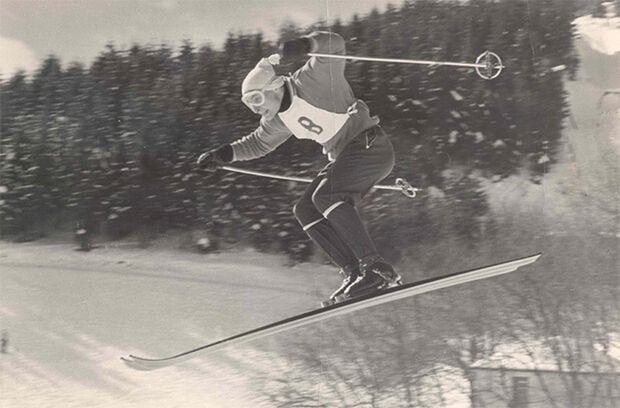
In his Erzgebirge hometown of Lauter, Eberhard Riedel began winter sports. Even as a small boy, he climbed from the village to the Morgenleithe, the home mountain, several times a day, then hurled himself down the valley. In 1947 he won a ski jump on the local Grieseschanze.
He transferred to SC Traktor Oberwiesenthal, where he was trained by Joachim Loos, and then devoted himself to alpine skiing. Between 1952 and 1956 he repeatedly became Sachsenmeister in the children's and youth divisions. In 1957 he was called up to the DDR alpine national team.
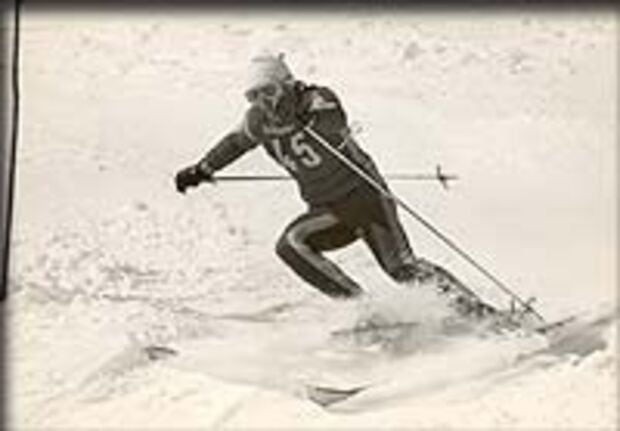
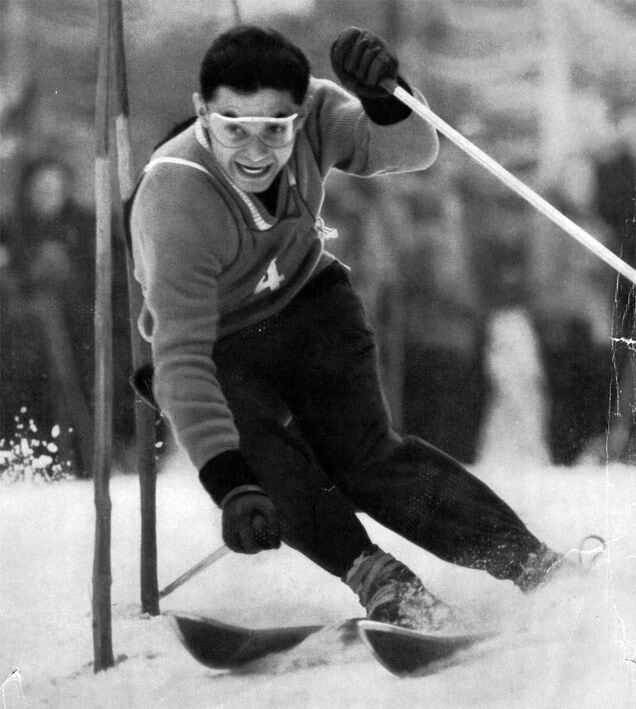
Eberhard Riedel competed in three Olympic Winter Games. In 1960 at Squaw Valley he finished 16th in the downhill, in 1964 in Innsbruck 15th in the giant slalom and 18th in the slalom. In 1968 in Grenoble he achieved his best Olympic result with 13th place in the slalom. He also competed at the Alpine World Championships in 1958 in Bad Gastein and in 1966 in Portillo, Chile.
Riedel learned the profession of a forester, in which he worked from 1962. From 1955 to 1962 he was a member of the National People’s Army. On October 20, 1963, he was elected to the Volkskammer of the GDR as a representative of the FDJ and served there for one legislative period until 1967. In 1964 he taught the then State Council Chairman Walter Ulbricht the slalom technique.
In the same year he began a distance learning course in sports science at the German University for Physical Culture in Leipzig and, after completing it, worked as a football, skiing, and ski jumping coach. He also briefly mentored Jens Weißflog. He ended his active career in 1969 after the DDR stopped funding alpine skiing.
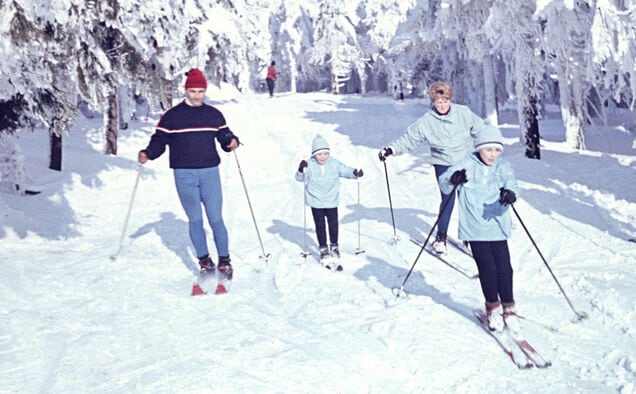
Together with his wife Hannelore, who also competed successfully in skiing, he lived in Kurort Oberwiesenthal. They have two grown sons, Olaf and Peter Riedel.
Kurort Oberwiesenthal, 1957 to 1968.
World Championships, Olympic Games and the classic races of the Alps, in the order of the years.
1958
Downhill Place 24, Slalom 27.
1959
Giant slalom and combined: 1st place, downhill: 2nd, special slalom: 3rd.
His greatest achievement so far was earned by the DDR runner Eberhard Riedel at the XIV Czech Memorial in Zakopane, Poland. He won the Alpine combined from a field of 44 participants, including the world-class Frenchman Bozon, with a grade of 2.18.
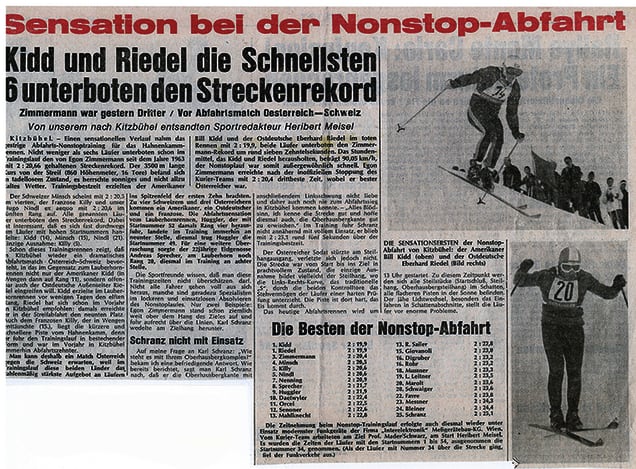
From the press
1960
Downhill 6th place, Combined 8th place, Slalom 11th place
1960
Departure Platz 16.
Before the race there was a dispute in the all-German team: In the downhill-combined, Riedel was supposed to run for West German Wagnerberger, whereupon ski ace Lanig threatened to go on strike.
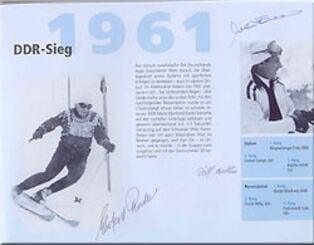
1961
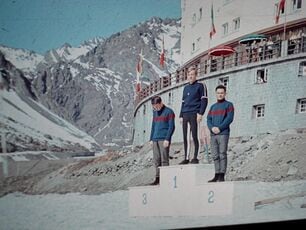
Giant Slalom, place 1. On a blunt surface he won with a 1.3-second lead.
At 60 kilometers per hour yesterday Eberhard Riedel raced down the 2.2 km giant slalom course in Adelboden toward victory. His first place in an international ski race was a sensation.
From the press
To date he is the only German winner of this race.
1962
Downhill place 12.
Of 127 participants, Ebs, a mid-mountain dweller, achieved 12th place in the slalom on a treacherously icy piste.
From the press
1962
Departure: Place 11.
Among 117 skiers from 22 countries, Eberhard Riedel finished an excellent eleventh in 2:40.8. He started 16th, and when the athletes of the absolute world elite had already finished the race, he was still in sixth place.
From the press
1964
Giant slalom place 15, slalom place 18.
1965
Giant slalom, 1st place.
1965
Downhill: 9th place.
1966
Downhill, place 22.
1967
Giant slalom and combined: 1st place, downhill: 2nd, special slalom: 3rd.
1968
Special slalom place 13, giant slalom place 41.
The best Olympic placement of his career.
The end of participation in international competitions came in 1968 in alpine racing. The GDR state and sports leadership made this decision due to supposedly high costs and unprofitability. Behind the scenes it was whispered that the professional development of this sport did not fit the socialist image. With this decision alpine racing in the GDR was no longer promoted and has since lived a shadow existence.
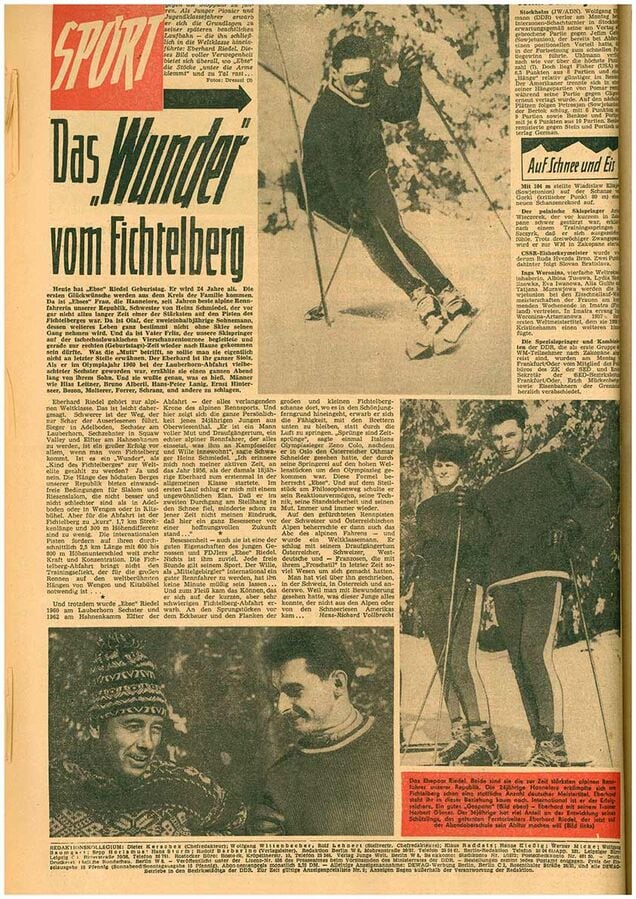
Race footage, press clippings and honors from seven decades. The templates come from the family archive.
The two oldest recordings: the Lauberhorn race and the Hahnenkamm downhill.
Two short shots from the Hahnenkamm, in the year of his ninth place in the downhill.
An interview from the Olympic Winter Games, where his best Olympic result was 13th place in slalom.
Two portraits: MDR on his 70th birthday and Swiss Sport Studio on the anniversary of the Adelboden victory.
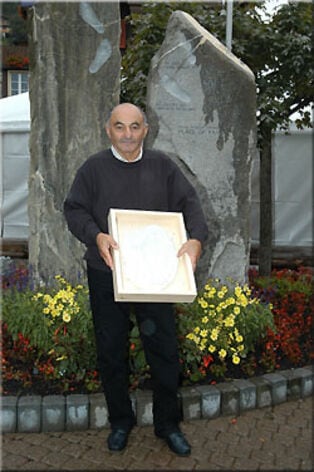
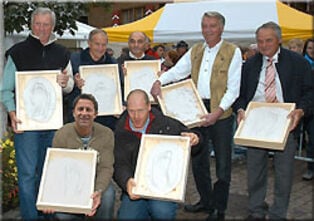
Sixty years later, back in the same place.
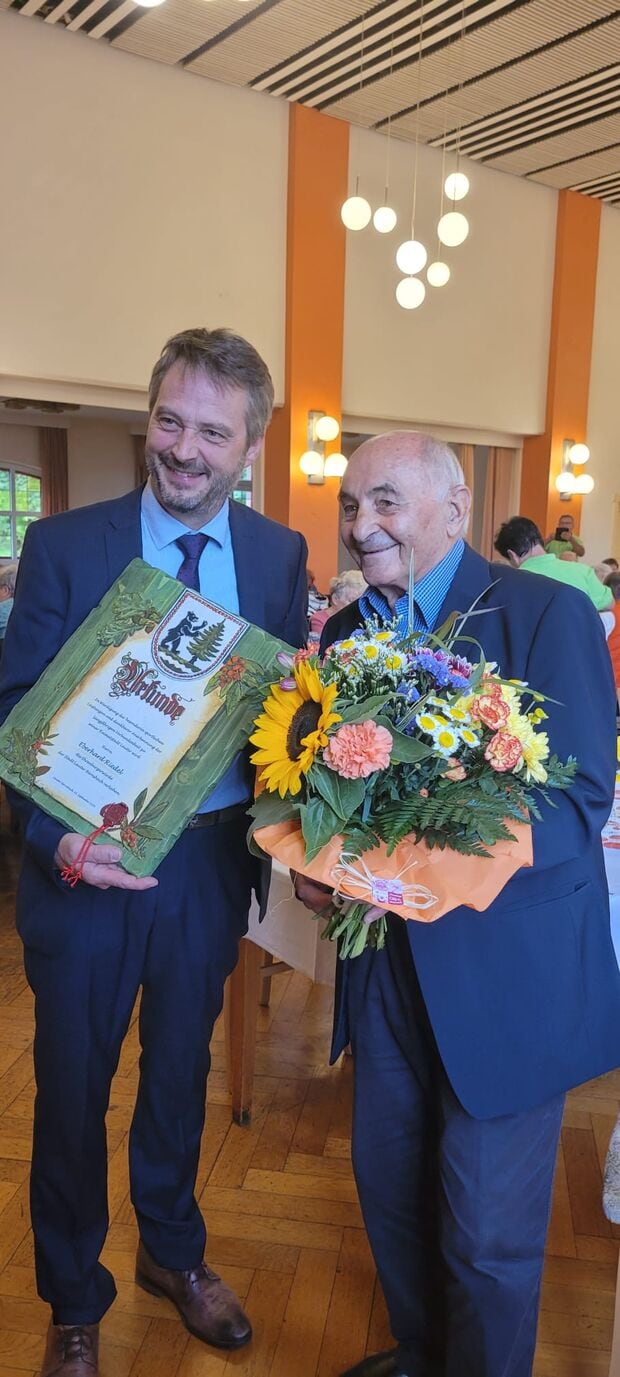
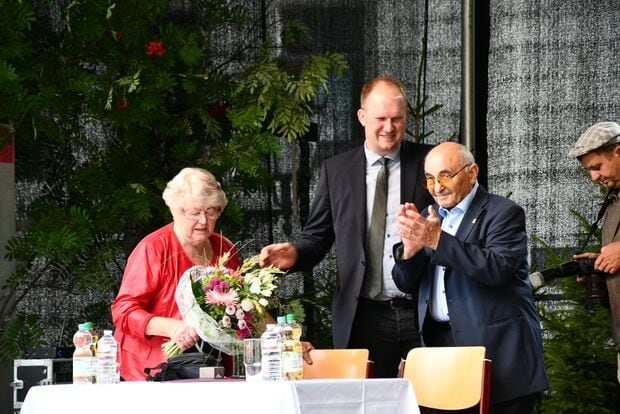
Kurort Oberwiesenthal 2023, Lauter, the birthplace, 2024. In Saxony, the title of Honorary Citizen is the highest award a city can confer.
During a ceremonial ceremony at the market square, my father was awarded the honorary citizenship of the town Kurort Oberwiesenthal. Together with his then coach Joachim Loos, he shaped the skiing history on the Fichtelberg and laid the foundation for a successful alpine skiing department at our home mountain.
Under the most challenging conditions, training took place back then. The more creative and stubborn one had to be: the lift line on the Fichtelberg was repurposed as a downhill run. On the occasion of the trainer’s 100th birthday, this slope today bears the name Joachim Loos.
The title of honorary citizenship stands as a sign of gratitude for the international attention Oberwiesenthal has gained through my father’s successes. Jens Weißflog and Gisela Lass, who gave the laudation, also confirmed this.
“It is emotionally very moving to revisit the whole story from back then. The images are so present and pass before my mind’s eye again, as if it all just happened recently. May today’s day, the trust and the appreciation shown to me, live on in our town Kurort Oberwiesenthal. Thank you for that,” my father said in his speech.
As part of the annual Erzgebirge Association festival, he was presented with the certificate by the mayor of Lauter-Bernsbach, Thomas Kunzmann. Numerous friends and companions had come to celebrate with “Ebs.”
The paragraph from the citizen information hits the point: “It is proposed that Eberhard Riedel's birthplace Lauter, today Lauter-Bernsbach, honor him with citizenship for his athletic achievements.”
Born and raised in Lauter, athletic enthusiasm was in his blood. Even when life and his career later carried him far around the world: Lauter has always been the center when it came to home. This is where it all began, and who knows, perhaps my father would never have become who he is if he hadn't grown up in this sports-influenced environment.
Following the death of Eberhard Riedel in April 2026, regional and local editors reported.
These pages were dedicated to my father Eberhard Riedel and updated on the occasion of his 88th birthday on February 14, 2026.