Peter Riedel
Something to think about...
The current situation is anything but easy for hill operators. Energy costs for snowmaking, lighting, building operating costs, cooling, etc.
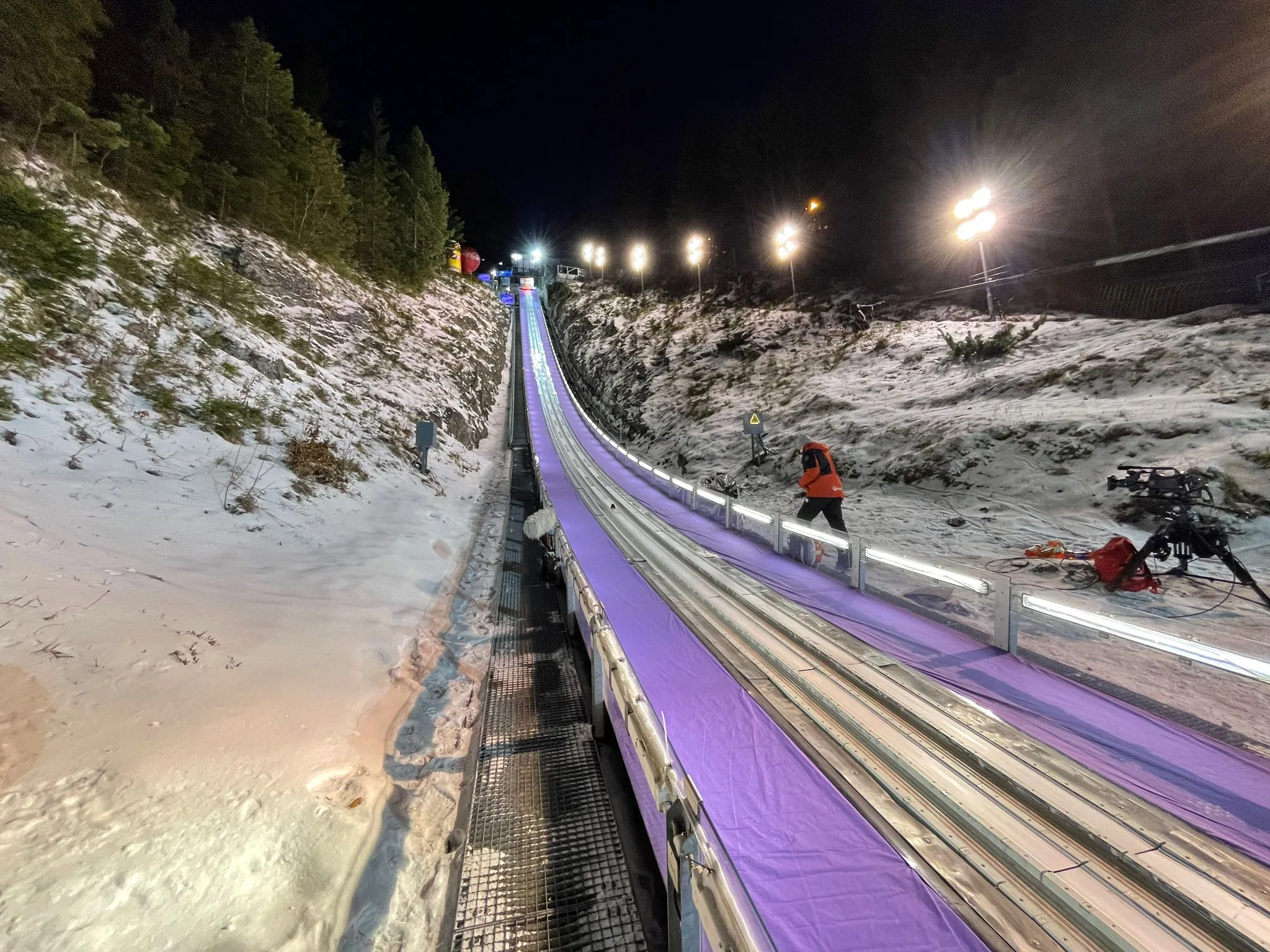
The current situation is anything but easy for hill operators. Energy costs for snowmaking, lighting, building operating costs, cooling, etc. are shooting through the roof. Heads are smoking trying to run training and competition operations at least somewhat economically.
A significant portion of these energy costs goes into the cooling systems for the ice tracks. To name a few numbers: most cooling systems run at 40-50 kilowatts — in normal jumping operations that’s 10,000 to 15,000 euros of energy costs per winter half-year. Many operators groan under rising energy costs and can’t bear them anymore. Or they don’t want to bear them anymore, as profitability is called into question. Added to this, climate change is slowly driving up average temperatures. The energy required to cool continues to rise. A vicious circle. No one is talking about it yet, but the topic will come up, I’m sure.
How far the debate has progressed is shown by the example of the Schönheide Wolves hockey club. The “Aufeisen,” the process of ice preparation in the ice hall, has been postponed for an indefinite period due to the energy crisis. Of course, cooling costs for an ice hall are many times higher than for an ice track, but cost-saving measures have long since arrived in the ski jumping world as well. For example, the German Championship in ski jumping next weekend in Hinterzarten will not be on ice but on the summer track. This leads to the same conclusion: that elite sport suffers under the energy crisis.
What can we do to ensure the operation of the approach tracks also in the future? Is the ice track still up-to-date? What other solutions exist to ensure the operation of the facility and, subsequently, make it as economical as possible? All questions that now, especially in connection with climate change, rising energy prices, and the energy crisis, repeatedly arise.
In the future, systems must be established that work year-round and consume as little energy as possible. One option would be to start on porcelain tracks in winter without ice and land on snow. Another would be to replace the “older” cooling units with newer, more efficient ones. The refrigerants used in older devices, R404a and R410a, now have only conditional approval. But can we sustainably counteract rising temperatures and exploding energy costs with them? Will there even be an ice track in 5, 10, 15 years?
In other areas, quite a bit has already happened in recent years. For example, water for track irrigation on the mountain is collected in containers and reused. Or the old track of the normal hill in Trondheim at Midtstubakken in Oslo is rebuilt there and used more efficiently instead of being discarded. These are best-practice examples of resource-conserving handling and living sustainability.
However, we are still lagging behind on energy consumption. And by a lot.
I think it is already time to start thinking about it. The international ski federation FIS is called upon to prepare for future scenarios and to initiate a rethink regarding energy consumption already now.
That they are indeed willing to venture into new terrain is shown by this year's World Cup start in Wisła. A few years ago it would have been unthinkable to host a World Cup on mats. Today, a few years later, we are exactly there.
What is your stance on this topic?